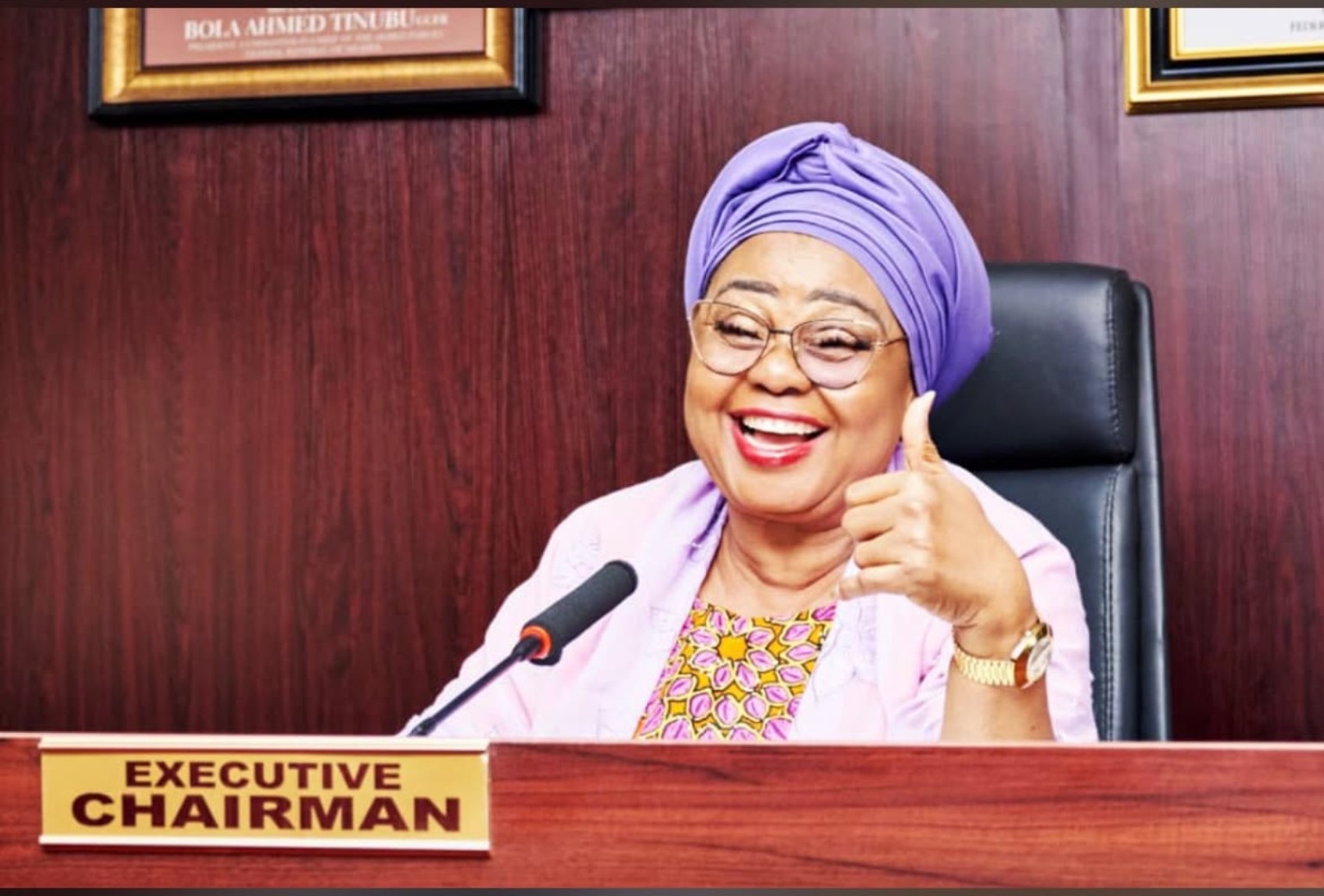
There are some public appointments that make people curious about what the person will bring to the table. And there are others where, even before the person settles into office, people already have a sense of what to expect based on their previous record.
The appointment of Hon. Hulayat Motunrayo Omidiran as Executive Chairman of the Federal Character Commission falls somewhere in between. She came into the Commission with experience from the National Assembly, public service, sports administration and years of involvement in community and national development. She was sworn into office in January 2026, and within these first months, there has been a visible attempt to bring a different level of energy, accessibility and institutional relevance to the Commission.
Digital transformation
One of the most noticeable areas is digital transformation.
The Commission has introduced a new digital platform aimed at improving public access to information, transparency and engagement. An Integrated Recruitment Portal has also been made available to provide a more structured avenue for Nigerians to access information on opportunities from Ministries, Departments and Agencies, while a whistleblower channel provides an avenue for concerns around Federal Character compliance to be raised.
For ordinary Nigerians looking for federal opportunities, this kind of development matters. Too many people hear about government recruitment opportunities through WhatsApp messages, social-media posts and unverified links. Having an official platform where citizens can verify information is a step towards reducing confusion and making access easier.
The digital agenda has also gone beyond the public-facing side of the Commission. There has been engagement around technology-driven Federal Character compliance, data management, artificial intelligence, cloud systems and data security, including efforts to strengthen the capacity of FCC personnel.
Stakeholder engagement
Since assuming office, the FCC leadership has engaged Ministries, Departments and Agencies, government institutions and other stakeholders on recruitment, appointments, promotions and compliance with the Federal Character Principle. There has also been an emphasis on improving the Commission’s internal capacity and repositioning it to play a more effective role in the Nigerian public service.
The five-day Executive and Management Leadership Retreat held in Ikogosi-Ekiti in July, for instance, focused on institutional renewal, leadership cohesion and national relevance. It brought management and stakeholders together to consider how the Commission can become more effective in carrying out its constitutional responsibilities.
For me, this is one of the areas that should not be overlooked.
Institutions do not become stronger simply because a new person occupies the office at the top. There has to be a willingness to review existing processes, listen to stakeholders, train people, identify weaknesses and build systems that can survive beyond one individual.
Hon. Omidiran has also been speaking about strengthening the Commission’s enforcement capacity, including the need for stronger legislative backing and a possible Federal Character Commission Tribunal to deal more effectively with violations.
Whether all these proposals eventually receive the necessary legislative backing is another matter. But raising them and putting them before the appropriate authorities is itself part of the work of institutional development.
Fairness and representation
Then there is the most sensitive part of the FCC’s mandate—equity, fairness and representation in federal opportunities.
This is where the Commission directly touches the lives of millions of Nigerians.
Federal Character should not just be something discussed in government offices or written in official documents. Nigerians want to see fairness reflected in recruitment, appointments, promotions and access to opportunities. They want to know that their state, region or background will not automatically place them at a disadvantage.
And that is why the Commission’s work under its present leadership deserves to be watched closely.
A leader with a strong connection to sports
Perhaps another indication of the breadth of Hon. Omidiran’s experience is the recognition she has continued to receive from the sporting community.
She was recently inaugurated as the first National Matron of the Sports Writers Association of Nigeria (SWAN), an honour that reflects her long-standing relationship with sports administration and development.
Her relationship with sports is not a recent development. Her involvement spans years, including her work with Omidiran Babes, her role on the Nigeria Football Federation Board and her service on the FIFA Women’s Football Committee. She has therefore spent years around athletes, administrators, journalists and young talents.
That background perhaps explains why the SWAN honour feels particularly fitting.
And what makes it even more interesting is that she has also recently been appointed Grand Patron of the FCC Sports Club. This is another recognition that speaks to her connection with sports and her willingness to encourage staff engagement, wellness, teamwork and camaraderie within the Commission.
These recognitions may appear different from her core responsibility as FCC Chairman, but they reveal something about the wider person occupying the office: someone whose public life has crossed politics, public administration, sports, youth development and community engagement.
Why her background matters
Her previous experience also helps explain why many people expected her to bring a certain level of understanding and stakeholder-management experience into the FCC.
Before becoming FCC Chairman, Omidiran served two terms in the House of Representatives and held several committee responsibilities. Her years in sports administration also exposed her to institutional leadership, grassroots development and national and international stakeholders.
So, perhaps, the expectations surrounding her appointment were not entirely misplaced.
What we are seeing now is still the beginning.
It would be unfair to write a final scorecard for an administration that is only months into its tenure. The real test will be whether these reforms become sustainable systems and whether Nigerians eventually feel their impact in actual recruitment, appointments, promotions, complaints resolution and access to opportunities.
But it is also fair to acknowledge visible efforts when they are being made.
The digitalisation of the Commission, staff training, increased stakeholder engagement, retreats and institutional reviews, the emphasis on equity and fairness, the recruitment-information portal and efforts to improve public accessibility all point towards an FCC that is trying to become more responsive.
And for an institution whose mandate is fundamentally about fairness and inclusion, that direction matters.
Her political activities and public engagements are also part of her broader public profile, including her involvement with SWAGA 2.0 and activities around President Tinubu’s 2027 second-term bid. But the most important thing, in my view, is how effectively she continues to focus on the constitutional responsibilities of the office and the mandate of the Commission.
For now, what interests me most is the work at the FCC itself.
If Hon. Hulayat Omidiran can continue to strengthen the systems being introduced, deepen engagement with MDAs, improve access to information, empower FCC staff and consistently insist on fairness and transparency, then the Commission can become even more relevant to the ordinary Nigerian.
There is still a long road ahead. But for those of us watching closely, there is certainly something to watch—and, hopefully, much more to come.
A prayer for the journey ahead
As I conclude this piece, I can only pray that Almighty God continues to strengthen Hon. Hulayat Motunrayo Omidiran and grant her the wisdom, courage and patience required for the responsibility she carries.
May God continue to order her steps, protect her from every distraction and surround her with people who genuinely mean well for her, her family and the institution she leads.
May every sincere effort she makes to bring fairness, transparency, inclusion and renewed confidence to the Federal Character Commission produce lasting results that Nigerians will continue to feel long after her tenure.
May she never lack the wisdom to make the right decisions, the courage to stand for what is right and the humility to keep listening to the people whose lives her office affects.
And as she continues to serve, may God preserve her health, her family, her reputation and her strength. May He open greater doors for her, honour her sacrifices and make her work a source of meaningful impact to Nigeria.
The journey has only just begun, and there is still much more to do.
May Almighty God guide her, protect her and grant her the grace to finish every assignment He has entrusted to her with honour, excellence and fulfilment. May her good intentions become visible results, and may her name always be associated with service, fairness and positive impact. Ameen.
— A Concerned Citizen of Nigeria, Watching Closely.